
How Illinois Inmate Records Work
Illinois does not publish one combined statewide jail roster. Each county controls its own local jail records through the sheriff, county corrections office, jail vendor, or county records process. IDOC controls state prison records for sentenced people in Illinois Department of Corrections custody. BOP controls federal prison records. ICE controls civil immigration detention lookup. VINELink provides custody and case notifications where available.
That structure means the right inmate record depends on where the person is in the custody path. A person arrested this morning may appear on a county roster or in VINELink but not in IDOC. A person sentenced to prison may disappear from a county roster after transfer and then appear in the IDOC locator. A person with a federal sentence should be checked through BOP even if the facility is physically in Illinois.
The IDOC Individual in Custody Search is the official statewide locator for state prison records.
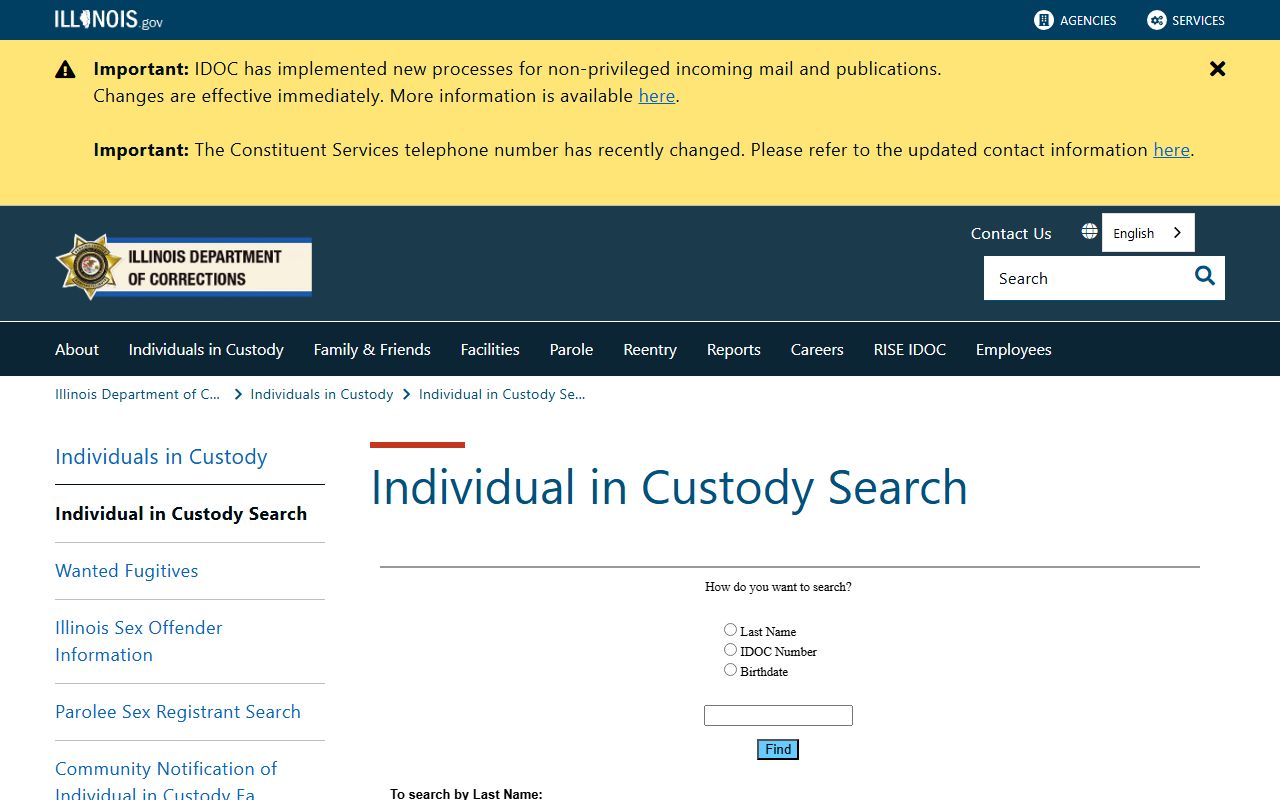
IDOC records are statewide prison records, while county jail rosters remain local records.
Find Illinois Inmate Records
A statewide Illinois inmate record search should move from most likely custody to fallback channels. If the arrest is recent, identify the county that booked or holds the person. If the person was sentenced to state prison, use IDOC. If a federal sentence or federal facility is involved, use BOP. If immigration detention is involved, use ICE ODLS. If status alerts matter, use VINELink after the correct person or case is found.
- Start with the county jail roster when the event is a new arrest, pretrial hold, bond question, short local sentence, or local warrant.
- Use the Illinois county directory when the county is known but the roster route is unclear.
- Use IDOC when the person is serving a state prison sentence or has entered reception, classification, treatment, work camp, reentry, or adult transition custody.
- Use BOP for federal custody and ICE ODLS for immigration detention.
- Use the court portal for filed charges, hearings, dispositions, and case status after booking.
The legacy IDOC search form supports last-name, IDOC-number, and birthdate searches.
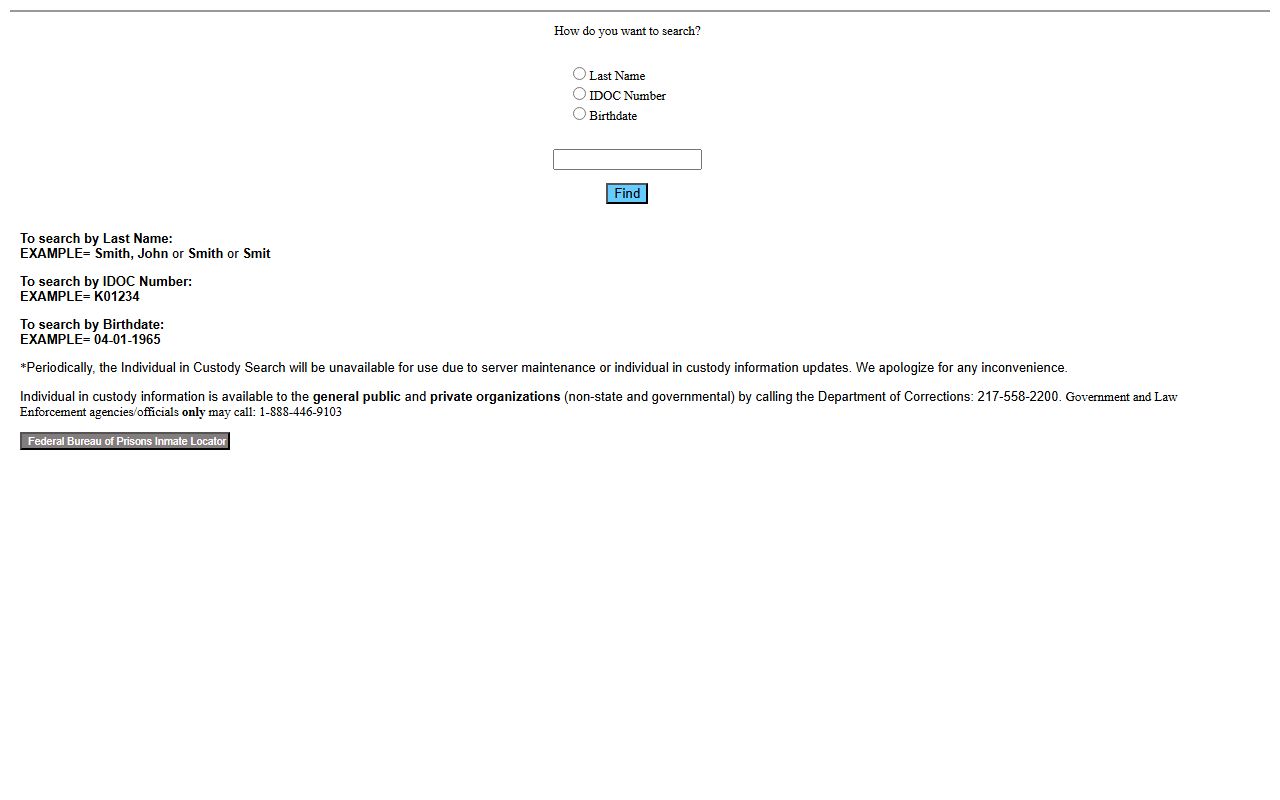
The state prison search fields are useful when the person has an IDOC profile, but they do not replace county booking search fields.
Illinois Custody Record Systems
Illinois custody records are easiest to read as four systems. Local jail records are county based. State prison records are IDOC based. Federal records are BOP based. Immigration detention records are ICE based. VINELink crosses some custody and case notification needs, and court portals show charges after arrest, but neither one should be treated as a full records archive.
| Custody Type | Run By | Where to Look | Common Record Fields |
|---|---|---|---|
| County jail | County sheriff or county corrections agency | County roster or county jail page | Name, booking date, charges, bond, photo, housing, status |
| State prison | Illinois Department of Corrections | IDOC Individual in Custody Search | IDOC number, parent institution, sentence data, projected MSR |
| Federal prison | Federal Bureau of Prisons | BOP inmate locator | Name, register number, age, release date, location |
| Immigration detention | ICE | ICE ODLS | A-Number route or biographical route, detention status where public |
The BOP inmate locator is the federal search route for federal custody.
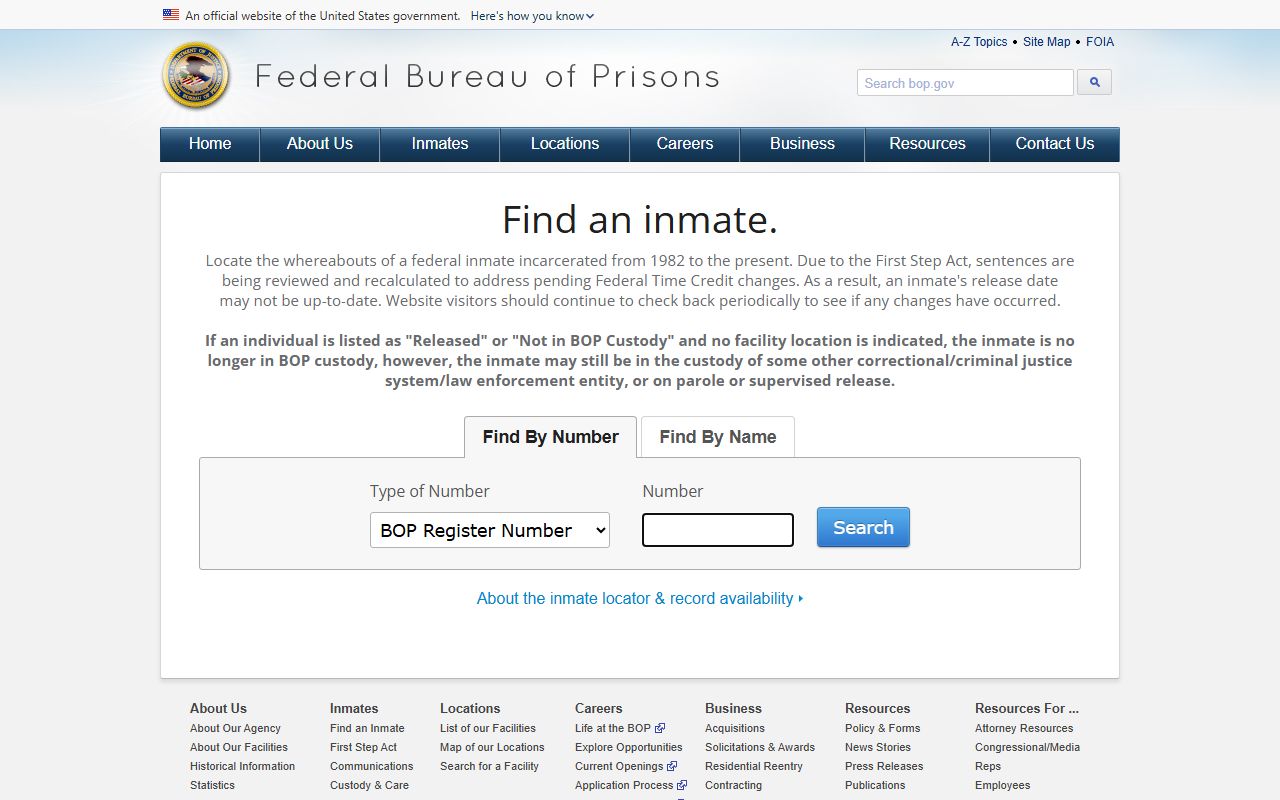
BOP records are federal records, even when the person is held at an Illinois federal facility.
Illinois Jail Roster Fields
County jail rosters vary, but most public jail profiles are built around the same practical fields. Some counties publish a searchable roster. Some publish booking reports or PDFs. Some rely on phone contact, a jail vendor, VINELink, or a FOIA request. The statewide rule is to read the local county page because the roster fields, update schedule, mugshot display, bond data, and records-request path can change by county.
| Field | Typical Use | Limits |
|---|---|---|
| Name | Primary search field for county rosters | Aliases, spelling, and hyphenation can block matches |
| Booking number | Unique local booking reference where shown | Not the same as an IDOC number |
| Charges | Booking or filed charge summary | Court records control final charge status |
| Bond or release status | Shows whether local release may be possible | May lag behind court or jail updates |
| Booking photo | County mugshot where public and posted | May be withheld, removed, or not shown by that county |
Illinois Inmate Profile Details
An Illinois inmate profile can mean different things based on the system. On a county roster, the profile usually reflects a booking event. In IDOC, the profile reflects a state prison custody record. In BOP, it reflects federal custody. In ICE, it reflects a civil immigration detention locator result. A no-result in one profile system means only that the record was not found there under the information entered.
| Profile Field | What It Shows |
|---|---|
| Booking or IDOC number | Local or state identifier, depending on the system searched. |
| Booking or admission date | County booking date for jail, or state admission context for IDOC. |
| Charges or sentence | Booking charge summary in jail, sentence fields in IDOC, or case-related data in court. |
| Facility or parent institution | The holding jail, prison, or parent institution shown by the public record. |
| Custody status | Public status field, which can lag behind release, transfer, or court action. |
Note: A roster or locator can lag after release, transfer, sentencing, or sealing, so verify urgent custody questions with the holding agency.
Illinois VINELink Records
VINELink is a notification channel rather than a complete inmate-record archive. It can help when a county does not publish a live roster, when a person may move between local custody and court events, or when a victim or family member needs alerts. The Illinois Attorney General victim notification material points to the victim notification system, and the statewide research identifies the Illinois VINELink portal as the public route.
The Illinois VINELink portal supports custody and case notifications for Illinois users.
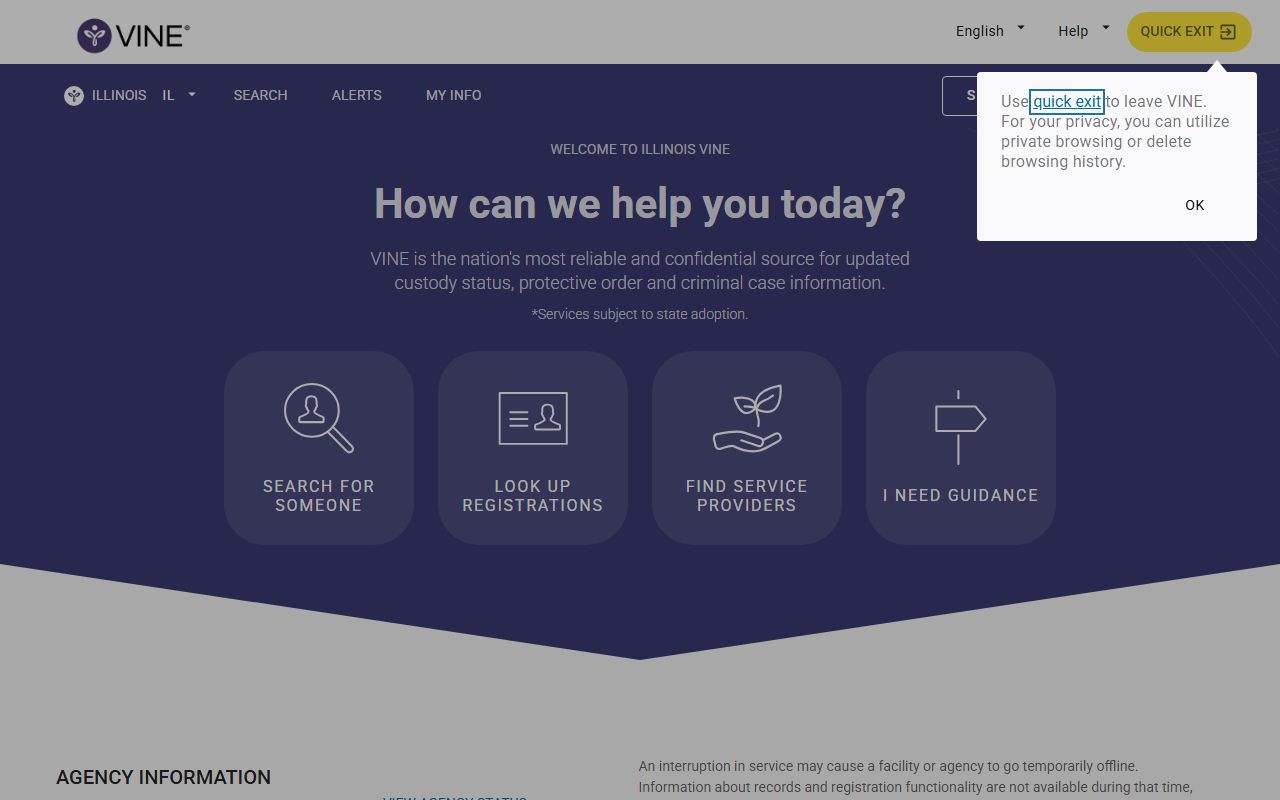
VINELink is useful as a status and alert tool, but official record copies still come from the agency that created the record.
Illinois Records Requests
Illinois FOIA, 5 ILCS 140, is the statewide public-records law for requests to state and local public bodies. County jail records go to the county sheriff, county FOIA officer, or local jail records process. IDOC records go to IDOC FOIA. Court records go to the circuit clerk or court portal. Police reports go to the arresting police department or sheriff, not automatically to IDOC.
For arrest reports and booking photos, 5 ILCS 140/2.15 is the statewide statute to read. It supports public access to many arrest facts in specified circumstances, but records can still be withheld or redacted for exemptions, juvenile confidentiality, sealing, expungement, investigative needs, privacy, and safety. The record owner matters. Ask the agency that created the record.
No Illinois Inmate Result
A no-result response should be read narrowly. It means the person was not found in that public system with the information entered. The name may be misspelled, hyphenated, shortened, or listed under an alias. The person may still be in booking intake, may have been released, may be in a neighboring serving jail, may have moved to IDOC after sentencing, or may be held in federal, immigration, juvenile, hospital, out-of-state, or confidential custody.
Use a fallback chain before making any conclusion. Check the arrest county and nearby serving-jail route. Search VINELink for custody alerts. Search IDOC if a state prison sentence is possible. Search BOP if the case is federal. Search ICE ODLS if immigration detention is possible. Then check the court case route for filed charges and hearing status. That method preserves the Illinois distinction between local jail custody, state prison custody, federal custody, immigration detention, and court records.
Illinois Visits, Mail, and Funds
Visitation, mail, phone, and commissary rules are facility-specific. A county jail can use one vendor and schedule, while an IDOC prison can use a different approval process and mail rule. Juvenile facilities, treatment facilities, work camps, and federal prisons can have separate limits. Always confirm the correct facility first, then use the county or IDOC facility page for visits, money deposits, mail addressing, and phone rules.
Public Record Search
Sponsored Results