
Illinois Court Records After Arrest
After an arrest in Illinois, the jail record and the court record develop on different tracks. The jail record is the booking and custody record. It may show a mugshot, booking number, charge labels, bond or release status, and the facility where the person is held. The court record starts when the prosecutor files charges in the proper county court. That record tracks the criminal case, not just the booking event.
The difference matters because booking charges can change. A prosecutor may file a different charge, amend a charge, reduce it, dismiss it, add counts, or obtain an indictment. Court records after a jail arrest should be checked through the circuit clerk or court portal for the county where the case was filed. For custody and booking details, use Illinois inmate records. For booking photos, use Illinois jail rosters and mugshots.
Illinois Court Records Routing
Illinois does not provide one universal public criminal case portal with identical coverage for every county. The statewide research identifies the Illinois Courts directory as the routing point for courts and online records links. Many counties use Judici. Some counties use Tyler or county-specific systems. re:SearchIL is also an Illinois court-records portal, but public access and coverage vary by court and user role.
The Illinois Courts directory is the statewide starting point for official court and online records routing.
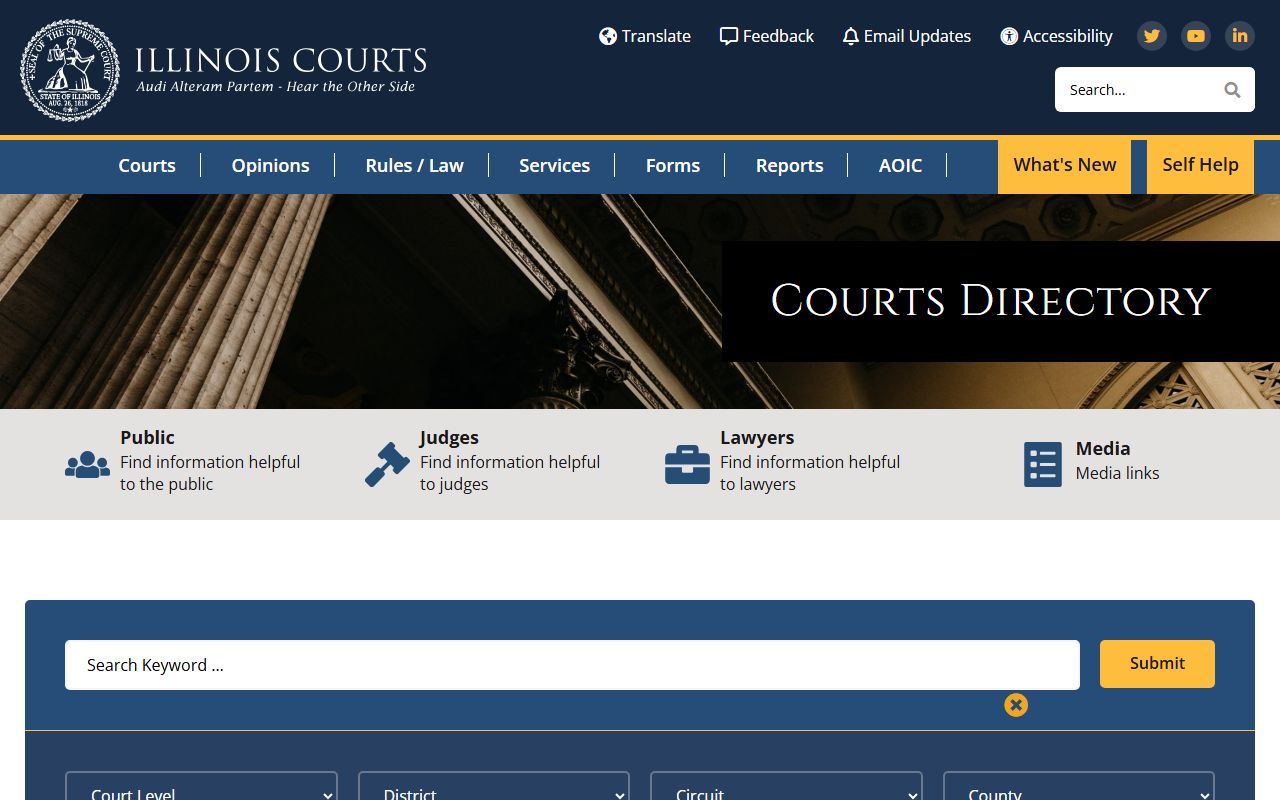
The directory helps identify the county court or circuit clerk source after a jail roster provides the arrest county or case number.
Search Court Records After Arrest
Start with the county where the arrest occurred or where the person is held. If the jail roster gives a case number, use it. If the roster gives only a name and booking date, search the relevant county court portal by name and compare dates. If Judici covers the county, check Judici. If a county uses another portal, follow the circuit clerk or Illinois Courts directory link.
- Identify the arrest county from the roster, booking report, police report, VINELink result, or family notice.
- Open the county court route through the Illinois Courts directory, Judici, re:SearchIL, or the local circuit clerk.
- Search by defendant name or case number, then compare filing date and charge labels to the booking record.
- Read the charge list, court dates, bond or release orders, warrants, dispositions, and status fields.
- Use the county clerk or official portal for copies, because the jail does not control the court docket.
The Judici Illinois courts portal is used by many Illinois counties for public case lookup.
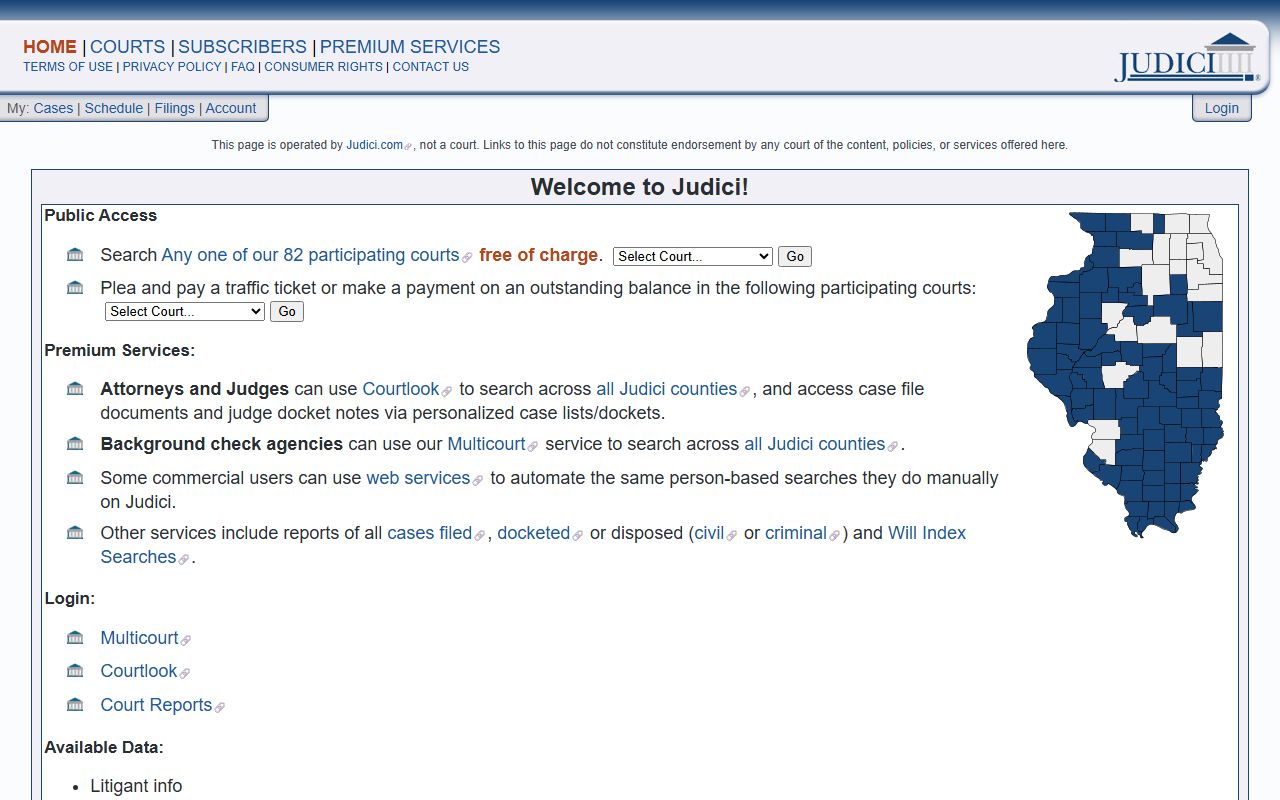
Judici is useful where it covers the county, but it is not the only Illinois court-records route.
Charges Filed After Arrest
A jail booking may list charges based on the arresting agency's information. The court case begins when the prosecutor or grand jury uses a charging document. The exact label can depend on the offense, county practice, and criminal procedure, but the public record should be read as a court filing rather than as a jail roster note.
| Document | Who Uses It | What It Does |
|---|---|---|
| Complaint | Law enforcement or prosecutor | Starts or supports a criminal case based on alleged facts. |
| Information | Prosecutor | Formally charges many cases without a grand jury indictment. |
| Indictment | Grand jury | Charges a case after grand jury action, often in more serious matters. |
Illinois Charge Status
Charge status can change quickly after an arrest. A pending charge means the case has not reached a final disposition. An amended charge means the filed count changed. A dismissed charge means the court or prosecutor ended that count. A conviction means guilt was found by plea, verdict, or other qualifying disposition. A court record after arrest should be checked for the current status, not just the first booking label.
| Status | Plain Meaning |
|---|---|
| Pending | The charge remains open in court. |
| Amended or reduced | The filed charge changed from the original count. |
| Dismissed | The charge was ended without a conviction on that count. |
| Convicted | The case resulted in a guilty plea, verdict, or qualifying finding. |
Note: A charge is an accusation, not a conviction, and court status should be verified through the clerk or official portal.
Charges vs Convictions
An arrest record can be public even when the person is not convicted. A charge is the prosecutor's formal accusation. A conviction is the result of a plea, trial verdict, or other court outcome. Jail rosters often show charges soon after booking, but they do not prove guilt and may not show later amendments or dismissals.
| Charge | Conviction | |
|---|---|---|
| Stage | Accusation after arrest or filing | Final or qualifying court outcome |
| Where seen | Jail roster and court docket | Court disposition and criminal history route |
| Meaning | Alleged offense | Legal finding or plea result |
Sealed Illinois Arrest Records
Public access can change after sealing, expungement, juvenile confidentiality, privacy redaction, or statutory exemptions. Illinois FOIA supports access to many arrest facts, and 5 ILCS 140/2.15 addresses arrest reports and booking photographs in specified circumstances. That does not mean every court record after arrest stays public forever or appears in every search portal.
| Sealed | Expunged | |
|---|---|---|
| Public view | Hidden from most public searches | Removed or treated as cleared under the applicable order |
| Agency access | May remain available to certain agencies | May be more limited, depending on order and law |
| Search impact | Online portals may stop showing the case | Records may no longer appear in public court searches |
Illinois Court Record Limits
Illinois FOIA governs state and local public bodies, but court access also depends on court rules, clerk systems, sealed-record orders, juvenile confidentiality, and portal limits. re:SearchIL and county portals may require different access levels. Judici coverage varies. If a case does not appear online, the right next step is the circuit clerk for the county where the case was filed.
The re:SearchIL portal is another Illinois court-records route, with public access and coverage that can vary by court and role.
When access varies, the circuit clerk or county court page is the control point for copies and status.
The IDOC Jail and Detention Standards page is useful for jail standards context but does not control court charges.
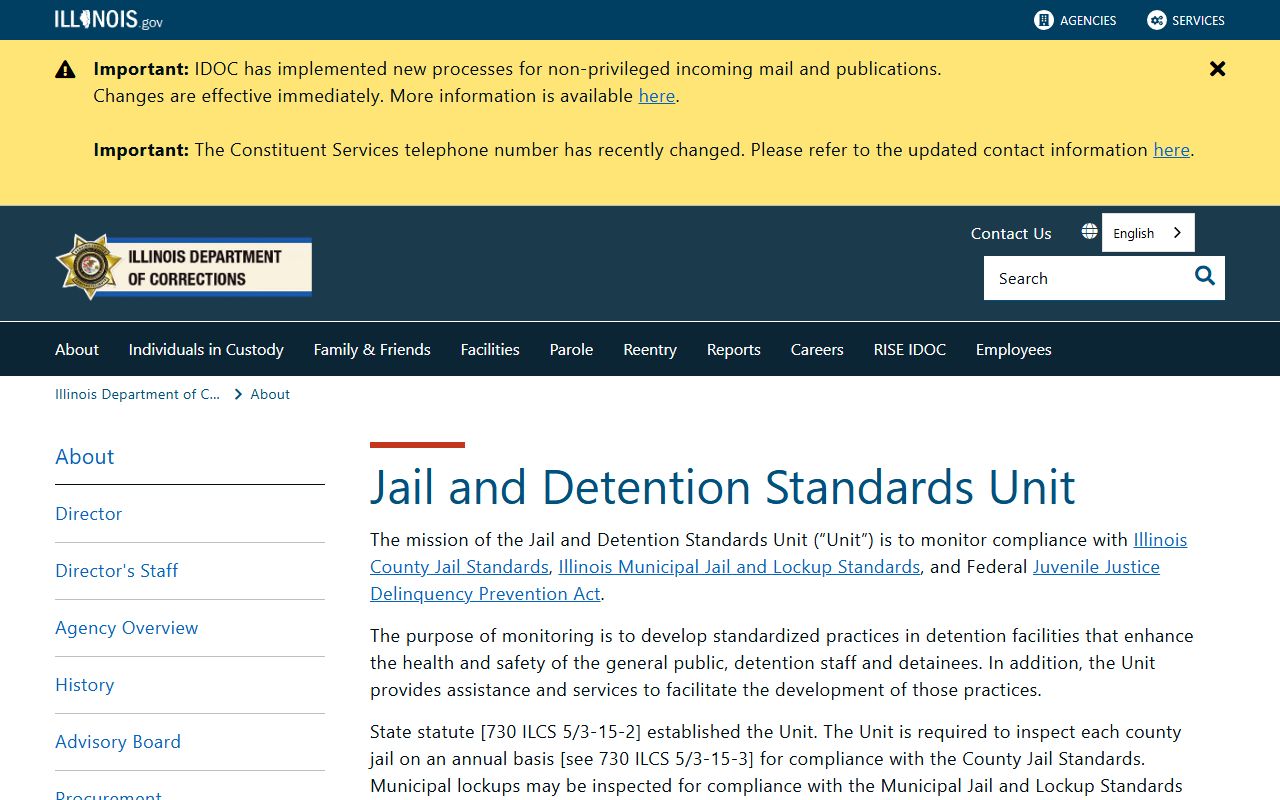
Jail standards and court records are separate statewide systems that often meet after an arrest.
Bond and Release Records
Illinois court records after arrest often show release conditions, warrants, custody orders, or hearing events that a jail roster does not fully explain. County jail data may show a bond or release status field, but the court order controls the legal condition. A person may be released from jail while the case remains pending, held on another warrant, transferred to another county, or moved to IDOC after sentencing.
When release status is urgent, verify both sides. The jail can confirm local physical custody. The court can confirm orders, next hearings, warrants, and dispositions. VINELink can provide alerts when supported. Reading only the roster can miss a court action, while reading only the court docket can miss a same-day jail transfer or release delay.
Criminal History vs Court Records
Illinois State Police criminal-history routes are separate from jail rosters and public court dockets. A court docket shows the public case record in that court. A jail roster shows custody. A criminal-history check may summarize eligible conviction-history information through a different process. The distinction matters because public internet searches should not be used as employment, tenant, credit, or insurance screening reports.
For ordinary public research after an arrest, the useful path is usually narrower. Confirm custody with the county jail or VINELink. Confirm filed charges and hearings with the circuit clerk or court portal. Confirm state prison custody with IDOC only after a prison sentence or transfer. That sequence keeps an Illinois arrest record from being confused with a conviction-history report or a current inmate record.
Public Record Search
Sponsored Results